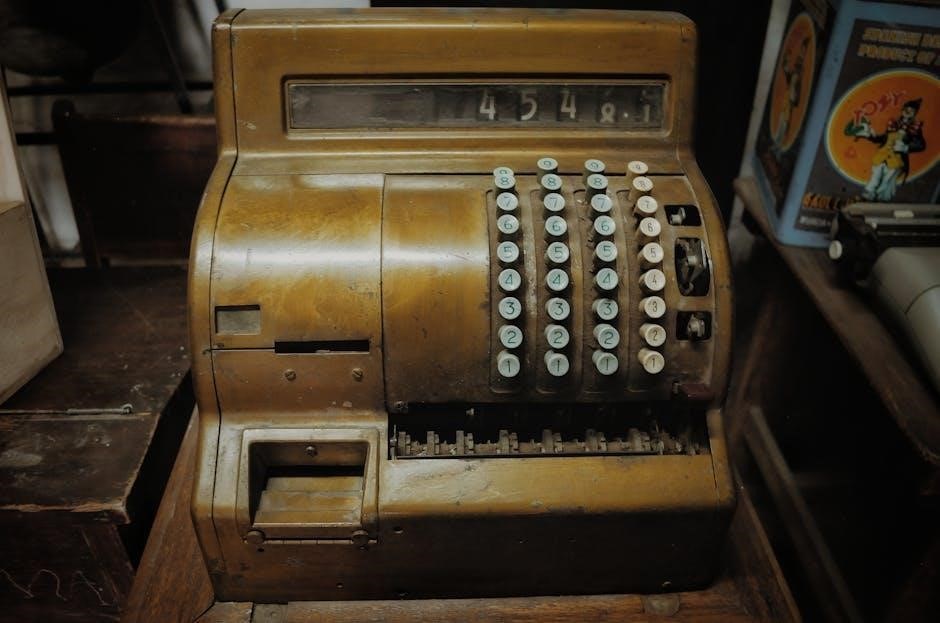
Casio PCR-T273 User Manual: A Comprehensive Guide
This guide offers detailed instructions for the Casio PCR-T273‚ covering setup‚ operation‚ programming‚ and troubleshooting‚ with downloadable manuals available online․
The Casio PCR-T273 is a robust and reliable cash register designed for various retail and hospitality environments․ It’s a popular choice due to its user-friendly interface and efficient operation․ This manual serves as a comprehensive resource for both new and experienced users‚ providing step-by-step guidance on maximizing the register’s capabilities․
Available through resources like the Internet Archive‚ downloadable PDF versions of the user manual and programming guides are readily accessible․ These resources‚ uploaded by users like chris85‚ offer detailed instructions for setup‚ programming departments and PLUs‚ managing taxes‚ and handling sales transactions․ Understanding this manual is crucial for efficient operation and troubleshooting․
Whether you need to process sales‚ manage cash drawers‚ or generate reports‚ this guide will help you navigate the PCR-T273’s features effectively․
Key Features and Specifications
The Casio PCR-T273 boasts a range of features designed to streamline business operations․ While specific detailed specifications aren’t explicitly listed in the readily available online resources‚ it’s known as a dependable cash register for North American customers․
Key functionalities include efficient sales processing‚ department management via PLU programming‚ and flexible tax configuration options․ Users can also implement discount and markup settings to tailor pricing strategies․ Access to downloadable manuals‚ found on platforms like the Internet Archive‚ provides detailed insights into these features․
The PCR-T273 supports data backup and retrieval‚ ensuring business continuity․ Its robust design and user-friendly interface make it a valuable asset for businesses of all sizes․ Programming manuals are available for purchase‚ offering advanced customization options․

Getting Started
Begin with unboxing and initial setup‚ referencing the downloadable user guide for the Casio PCR-T273‚ then proceed to power on and basic operations․
Unboxing and Initial Setup
Carefully unpack your Casio PCR-T273 cash register‚ ensuring all components are present․ These typically include the main unit‚ power cord‚ and potentially a starter roll of paper․ Inspect for any shipping damage immediately․
Connect the power cord to the register and a suitable power outlet․ Before powering on‚ verify the voltage compatibility․ Install the paper roll following the instructions in the user manual – readily available for download from resources like the Internet Archive․
Initial setup may involve setting the date and time․ Refer to the manual for specific key combinations and menu navigation․ Ensure the printer is functioning correctly by performing a test print․ Familiarize yourself with the layout of the keys and display for a smooth start․
Powering On and Basic Operations
To power on the Casio PCR-T273‚ locate and press the power key – typically labeled “ON/OFF”․ The display will illuminate‚ initiating a self-test․ Basic operations begin with entering numbers using the numeric keypad․ The “CLR” or “CE” key functions to clear entries․
Practice entering sample prices and quantities․ Use the “SUBTOTAL” key to calculate the running total․ The “TAX” key applies applicable taxes‚ configured during programming․ The “TOTAL” key displays the final amount due․
Familiarize yourself with the function keys‚ often programmable for common items or discounts․ Consult the downloadable user manual from sources like the Internet Archive for detailed key assignments and operational procedures․

Programming the PCR-T273

Programming involves setting up departments‚ PLUs‚ taxes‚ discounts‚ and markups‚ often requiring a programming manual available for download online․
Department Setup and PLU Programming
Department setup is fundamental to organizing your sales data on the Casio PCR-T273․ Each department represents a category of items you sell – for example‚ “Groceries‚” “Hardware‚” or “Clothing․” Programming departments allows for tracking sales by category‚ providing valuable business insights․
PLU (Price Look-Up) programming involves assigning unique codes to individual items within each department․ This eliminates the need to manually enter prices for each sale‚ speeding up transactions and reducing errors․ The programming manual details how to assign PLU codes‚ set prices‚ and link them to the correct departments․

Detailed instructions for both department and PLU programming are available in downloadable PDF manuals from resources like the Internet Archive․ These manuals‚ often provided by users like “chris85”‚ offer step-by-step guidance for efficient setup․
Tax Configuration
Tax configuration on the Casio PCR-T273 is crucial for accurate sales reporting and compliance․ The system allows for programming multiple tax rates to accommodate varying local and national tax laws․ This includes standard sales tax‚ as well as potentially exempt taxes or reduced rates for specific items․

The user manual details how to enter tax percentages‚ assign them to specific departments or PLUs‚ and configure rounding rules․ Proper configuration ensures that the correct tax amount is calculated and applied to each transaction‚ simplifying accounting processes․
Downloadable programming manuals‚ accessible through the Internet Archive‚ provide detailed instructions and examples for setting up tax rates․ Resources uploaded by users offer guidance for navigating the PCR-T273’s tax settings effectively․
Discount and Markup Settings
The Casio PCR-T273 offers flexible discount and markup functionalities to manage promotions and pricing strategies․ Users can program various discount types‚ including percentage discounts‚ fixed amount discounts‚ and employee discounts‚ applying them to specific departments‚ PLUs‚ or the entire sale․
Markup settings allow for increasing the price of items‚ useful for adjusting to cost changes or implementing profit margins․ The programming manual‚ available for download‚ details how to configure these settings‚ including setting discount/markup limits and conditions․
Resources on the Internet Archive‚ uploaded by users‚ provide practical guidance on utilizing these features․ Proper configuration ensures accurate pricing and promotional offers‚ enhancing sales and customer satisfaction․

Cashier Operations
Cashier functions include processing sales‚ handling returns efficiently‚ and managing the cash drawer—all detailed in the PCR-T273 user manual available online․
Processing Sales Transactions
Initiating a sale on the Casio PCR-T273 involves entering the PLU code or scanning the barcode of each item․ The system automatically calculates the total‚ including applicable taxes․
Payment methods accepted include cash‚ check‚ and potentially card payments with compatible peripherals․ The cashier inputs the amount tendered‚ and the PCR-T273 calculates the change due․
Receipt printing occurs automatically after the transaction is finalized‚ providing a detailed record for both the customer and the business․ The user manual details specific key sequences for various transaction types‚ including voids and discounts․ Proper training‚ guided by the manual‚ ensures accurate and efficient sales processing․ Downloadable guides are readily available online․
Handling Returns and Exchanges
Processing returns on the Casio PCR-T273 requires specific procedures outlined in the user manual․ Typically‚ this involves entering the original transaction details or scanning the receipt․
Exchange options include a direct swap for another item‚ or a refund to the original payment method․ The system must be programmed to allow returns and exchanges‚ and may require manager authorization for certain amounts․
Proper documentation is crucial; the manual details how to record return reasons and adjust inventory accordingly․ Utilizing the correct key sequences ensures accurate accounting and minimizes discrepancies․ Online resources and downloadable guides provide step-by-step instructions for efficient return and exchange handling․
Cash Drawer Management
Effective cash drawer management on the Casio PCR-T273 is vital for accurate accounting․ The user manual details procedures for opening and closing the drawer‚ including daily start and end-of-day processes․
Regular counts and reconciliation are essential‚ with the system providing tools to track discrepancies․ The manual explains how to perform Z-counts and compare physical cash with recorded transactions․
Security features‚ such as key control and drawer access restrictions‚ are also covered․ Proper training on these procedures minimizes the risk of theft and ensures accountability․ Downloadable guides offer detailed instructions for maintaining accurate cash handling practices‚ contributing to overall financial control․

Reporting and Data Management
The PCR-T273 facilitates daily sales reports‚ Z-reports‚ and data totaling․ Manuals detail backup and retrieval procedures‚ ensuring data security and accessibility․
Daily Sales Reports
Generating daily sales reports on the Casio PCR-T273 is a crucial function for business owners․ These reports provide a comprehensive overview of all transactions processed during a specific day․ The user manual details how to access these reports directly from the cash register’s interface‚ offering options for printing or viewing on the display․
Reports typically include total sales amounts‚ the number of transactions‚ average transaction value‚ and breakdowns by payment type (cash‚ credit‚ etc․)․ Understanding how to customize these reports – filtering by department or PLU‚ for example – is key to gaining valuable insights into sales trends․ The Internet Archive provides access to downloadable manuals that explain these functionalities in detail‚ ensuring users can effectively monitor their business performance․
Regular review of daily sales reports allows for informed decision-making regarding inventory management‚ staffing levels‚ and promotional strategies․
Z-Report and Totaling Functions
The Z-Report function on the Casio PCR-T273 provides a final summary of the day’s transactions‚ effectively “closing out” the register․ This report includes total sales‚ tax collected‚ number of transactions‚ and other key financial data․ Accessing the Z-Report requires a supervisor key or password‚ ensuring security and accountability․
Totaling functions allow cashiers to quickly calculate subtotals‚ apply discounts‚ and determine the final amount due; The user manual details how to utilize these functions efficiently‚ minimizing errors and speeding up the checkout process․ Manuals available through the Internet Archive explain the specific key sequences for various totaling operations․
Proper use of Z-Reports and totaling functions is essential for accurate financial record-keeping and reconciliation․
Data Backup and Retrieval
Protecting your sales data is crucial‚ and the Casio PCR-T273 offers methods for data backup‚ though specifics may vary based on model features․ Regularly backing up data prevents loss due to hardware failure or accidental deletion․ User manuals available on platforms like the Internet Archive detail any available backup procedures․
Data retrieval processes‚ if supported‚ allow restoration of backed-up information․ This ensures business continuity in case of unforeseen circumstances․ The availability of backup and retrieval options‚ and their complexity‚ are outlined in the official documentation․
Consult the manual for detailed instructions on how to perform backups and restore data effectively‚ safeguarding your financial records․

Troubleshooting Common Issues
Resolve typical problems like error codes‚ paper jams‚ and connectivity issues using the PCR-T273 user manual’s solutions and guidance for smooth operation․
Error Codes and Solutions
Encountering error codes on your Casio PCR-T273 can disrupt operations‚ but understanding their meaning is key to swift resolution․ The user manual provides a comprehensive list of these codes‚ detailing the specific issue each indicates․
Common errors might relate to printer malfunctions‚ memory errors‚ or communication failures․ For example‚ a paper jam will often trigger a specific code‚ prompting immediate attention to the paper path․
The manual’s solutions guide you through step-by-step troubleshooting‚ from checking connections and paper supply to resetting the system․ Referencing the error code list ensures accurate diagnosis and efficient repair‚ minimizing downtime and maintaining business continuity․ Always consult the manual before attempting complex fixes․
Paper Jam Resolution
Paper jams are a frequent issue with thermal printers like the Casio PCR-T273․ The user manual provides detailed instructions for safe and effective paper jam removal․ First‚ power off the cash register to prevent damage during the process․

Access the printer compartment‚ usually located at the front or side of the machine․ Gently remove any torn paper fragments‚ being careful not to damage the thermal head or paper sensors․
Inspect the paper path for any remaining obstructions․ Ensure the new paper roll is correctly loaded and that the paper guide is properly adjusted․ Restart the register and test the printing function․ Consistent jams may indicate a faulty paper sensor or a damaged printer mechanism – consult a technician if the problem persists․
Connectivity Problems
The Casio PCR-T273 may experience connectivity issues when interfacing with peripherals like scanners or external displays․ Verify all cable connections are secure at both ends – the cash register and the connected device․ Ensure the correct communication protocol is selected in the register’s settings․
Check for driver compatibility if connecting via a computer․ Outdated or incorrect drivers can cause communication failures․ Restart both the cash register and the connected device to refresh the connection․
Consult the manual for specific port configurations and baud rate settings․ If problems persist‚ try a different cable or port․ For network connectivity‚ confirm the network settings are correctly configured and the register has a valid IP address․



Leave a Reply
You must be logged in to post a comment.