Alabama Football Workout Program Overview
Alabama’s football program emphasizes rigorous training‚ blending historical methods with Nick Saban’s modern approach‚ focusing on peak physical conditioning and athletic development.
Historical Context of Alabama Football Strength Training
Historically‚ Alabama football’s strength training evolved from basic calisthenics and rudimentary weightlifting‚ mirroring national trends in the early 20th century. Early programs prioritized building foundational strength and endurance‚ essential for the demanding physical nature of the game. As football progressed‚ so did the training methodologies‚ incorporating more scientific principles.
Prior to the modern era‚ training often relied on coach’s experience and anecdotal evidence. The mid-20th century saw the introduction of more structured weightlifting programs‚ but these were often limited by available equipment and understanding of periodization. The program’s evolution reflects a continuous pursuit of maximizing player performance through increasingly sophisticated training techniques‚ laying the groundwork for today’s comprehensive approach.
Nick Saban’s Influence on Program Development
Nick Saban’s arrival at Alabama marked a paradigm shift in the program’s strength and conditioning philosophy. He prioritized a scientifically driven‚ meticulously planned approach‚ emphasizing year-round development rather than solely focusing on in-season maintenance. Saban fostered a culture of relentless pursuit of physical dominance‚ demanding a commitment to detailed programming and individualized training plans.
His influence extended to investing in state-of-the-art facilities and assembling a highly qualified strength staff. Saban’s emphasis on periodization‚ recovery‚ and injury prevention became hallmarks of the program‚ contributing significantly to Alabama’s sustained success and establishing a new standard for collegiate football strength training.

Off-Season Training Phases
Alabama’s off-season program is strategically divided into three phases: conditioning & mobility‚ strength development‚ and power & speed‚ building a strong athletic foundation.
Phase 1: Conditioning & Mobility (January — February)
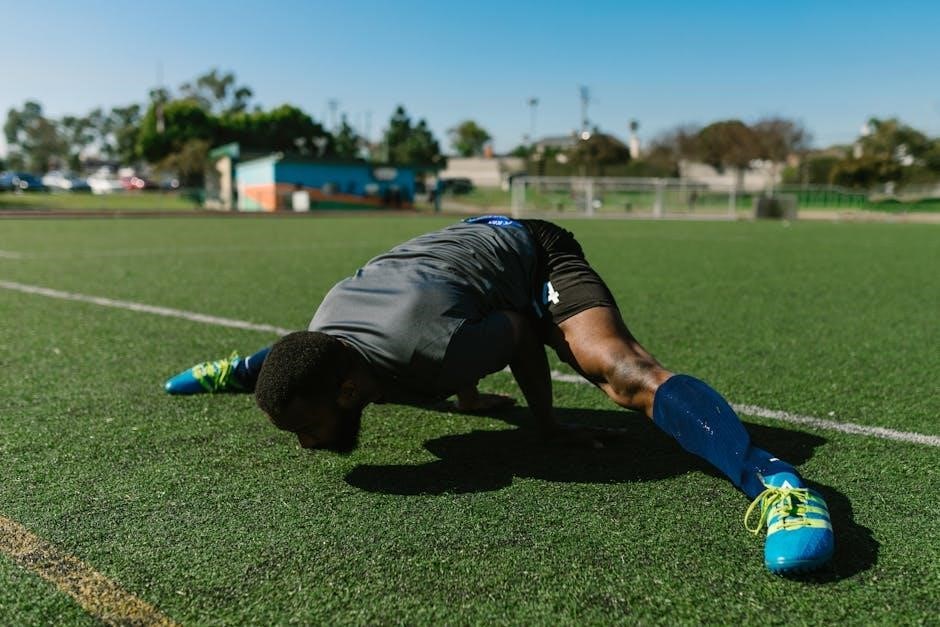
Phase one prioritizes establishing a robust base of physical conditioning and enhancing overall movement quality. This initial stage‚ spanning January and February‚ focuses heavily on foundational fitness elements. Workouts emphasize cardiovascular endurance through varied running drills – including interval training and longer‚ sustained runs – to improve stamina.
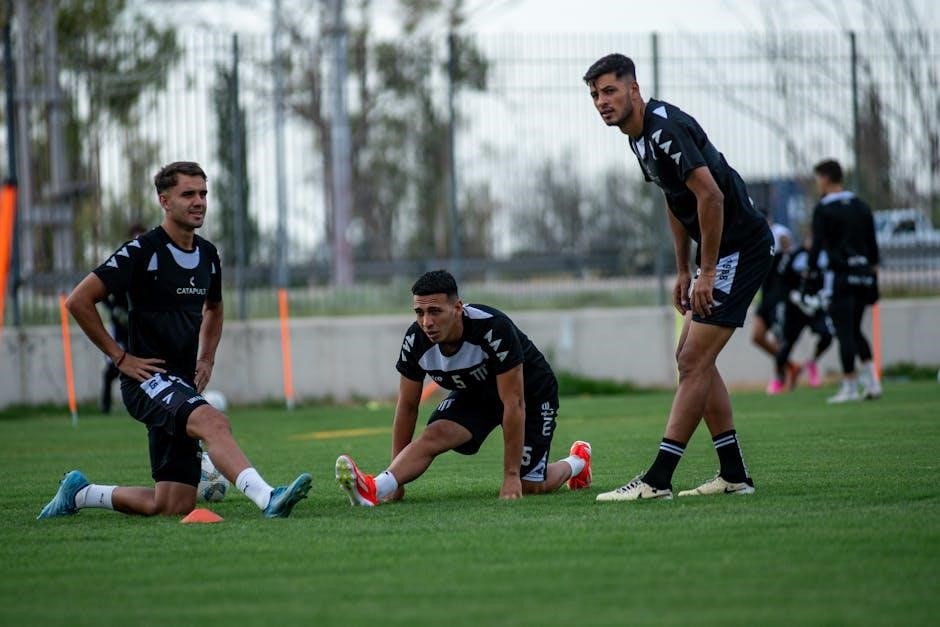
Crucially‚ mobility work is integrated to increase range of motion and flexibility‚ reducing injury risk. Dynamic stretching‚ foam rolling‚ and targeted mobility exercises are central; The aim isn’t maximal strength gains yet‚ but rather preparing the body for the more intense phases ahead by building a resilient and adaptable physical platform.
Phase 2: Strength Development (February, March)
Following the conditioning base‚ February and March mark the strength development phase. This period shifts the focus towards building maximal strength through a structured weightlifting program. Core lifts – squats‚ bench press‚ and deadlifts – form the foundation‚ utilizing progressive overload principles to continually challenge athletes.
Accessory exercises target supporting muscle groups‚ addressing imbalances and enhancing overall strength. Volume is increased gradually‚ while maintaining proper form to prevent injury. This phase isn’t about power or speed; it’s about establishing a solid strength foundation upon which subsequent phases will build‚ preparing the athletes for more explosive movements.
Phase 3: Power & Speed (March — April)
Building upon the strength foundation‚ March and April concentrate on translating strength into power and speed. This phase incorporates Olympic lifts – cleans‚ snatches‚ and jerks – alongside plyometric exercises like box jumps and depth jumps to develop explosive power. Weightlifting intensity decreases slightly‚ while velocity and intent increase dramatically.
Speed work intensifies‚ focusing on sprinting mechanics‚ acceleration‚ and agility drills. Shuttle runs and cone drills refine change-of-direction ability. The goal is to maximize the rate of force development‚ enabling athletes to generate powerful movements quickly and efficiently‚ crucial for success on the football field.

In-Season Workout Maintenance
Maintaining peak performance during the season requires strategic workouts‚ prioritizing recovery and injury prevention while preserving strength gains achieved during off-season training.
Maintaining Strength During the Season
Alabama’s in-season strength program isn’t about building new muscle‚ but crucially‚ about maintaining the hard-earned gains from the off-season. Workouts shift to higher frequency‚ lower volume sessions‚ typically 2-3 times weekly‚ focusing on compound lifts with reduced weight. This prevents overtraining and fatigue during the demanding game schedule.
Emphasis is placed on movement quality and technique to reinforce proper form and minimize injury risk. Coaches closely monitor player fatigue levels‚ adjusting workloads accordingly. The goal is to arrive at each game physically prepared‚ capable of executing at their highest level‚ without being compromised by accumulated exhaustion. This delicate balance is key to sustained success.
Focus on Recovery and Injury Prevention
Alabama’s program prioritizes recovery as much as training itself. Daily protocols include active recovery sessions – light cardio‚ stretching‚ and foam rolling – to reduce muscle soreness and improve blood flow. Dedicated athletic trainers provide regular soft tissue work and monitor players for signs of overtraining or potential injury.
Prehab exercises‚ targeting common football injury sites like knees‚ shoulders‚ and ankles‚ are integrated into daily routines. Nutrition and hydration are strictly managed to support muscle repair and overall health. Adequate sleep is also heavily emphasized‚ recognizing its vital role in recovery and performance. This holistic approach minimizes downtime due to injury.
Core Workout Components
Alabama’s core training revolves around weightlifting‚ plyometrics‚ and speed drills‚ building a foundation of strength‚ power‚ and agility for peak performance.
Weightlifting Exercises: Key Lifts
Alabama’s strength program prioritizes foundational lifts to maximize athletic potential. Squats‚ in various forms – back‚ front‚ and goblet – are central for lower body power and core stability. The bench press‚ alongside incline and decline variations‚ builds upper body strength crucial for blocking and tackling.
Deadlifts‚ including conventional and sumo styles‚ enhance overall strength and posterior chain development. These lifts aren’t performed in isolation; accessory exercises target supporting muscle groups. Proper form and progressive overload are paramount‚ ensuring athletes safely build strength throughout the off-season and maintain it during the competitive season.
Squats and Variations
Squats form the cornerstone of Alabama’s lower body strength development‚ building foundational power and stability. The program utilizes back squats as a primary lift‚ emphasizing proper technique and depth. Front squats are incorporated to enhance quad activation and improve core engagement‚ crucial for maintaining balance during gameplay.
Goblet squats offer a variation for athletes needing technique refinement or those focusing on building initial strength. Alabama’s approach includes periodization‚ varying rep ranges and intensity to optimize strength gains and prevent plateaus. Coaches prioritize safe progression‚ ensuring athletes master each variation before advancing.
Bench Press and Variations
Bench press is central to developing upper body strength for Alabama football players‚ vital for blocking‚ tackling‚ and overall physicality. The program emphasizes a full range of motion and controlled descent‚ prioritizing safety and proper form. Incline bench press targets the upper chest‚ enhancing pushing power‚ while decline bench press focuses on the lower chest for balanced development.

Alabama’s strength staff incorporates variations like dumbbell bench press to address muscle imbalances and improve stability. Periodization is key‚ with varying rep schemes and intensities to maximize strength gains. Athletes progress gradually‚ ensuring mastery of technique before increasing weight.
Deadlifts and Variations
Deadlifts are a cornerstone of Alabama’s strength program‚ building full-body power and reinforcing proper lifting mechanics. The conventional deadlift is the primary lift‚ emphasizing a strong back and powerful hip extension. Sumo deadlifts are utilized to target different muscle groups and offer a variation for athletes with specific biomechanical needs.
Alabama’s program incorporates Romanian deadlifts (RDLs) to enhance hamstring and glute strength‚ crucial for sprinting and agility. Proper form is paramount‚ with coaches closely monitoring technique to prevent injury. Progressive overload is implemented‚ gradually increasing weight to stimulate continued strength gains.
Plyometrics and Explosive Training
Plyometrics are integral to Alabama’s program‚ developing explosive power essential for football performance. Box jumps and depth jumps enhance reactive strength‚ improving jump height and acceleration. These exercises train the stretch-shortening cycle‚ maximizing force production.
Medicine ball throws – overhead‚ rotational‚ and chest passes – build explosive upper body power and core stability. Variations target different muscle groups and movement patterns. Emphasis is placed on proper technique and controlled landings to minimize injury risk. Alabama’s coaches carefully progress plyometric volume and intensity throughout the training phases.
Box Jumps and Depth Jumps
Box jumps build explosive leg power and improve vertical jump height‚ crucial for various football positions. Athletes perform maximal-effort jumps onto boxes of varying heights‚ focusing on a soft landing. Depth jumps‚ a more advanced plyometric‚ involve stepping off a box and immediately jumping upwards upon ground contact.
This enhances reactive strength and the stretch-shortening cycle. Alabama’s program emphasizes proper technique – controlled descent‚ minimal ground contact time‚ and full extension – to prevent injuries. Volume and box height are progressively increased‚ tailored to individual athlete’s capabilities and position demands.
Medicine Ball Throws
Medicine ball throws are integral to developing rotational power and core stability‚ essential for tackling‚ blocking‚ and throwing motions in football. Alabama’s program utilizes various throws – overhead‚ chest pass‚ rotational – targeting different muscle groups and movement patterns.
Athletes focus on generating force from the core and hips‚ maximizing velocity and distance. Weight selection is crucial‚ balancing challenge with maintaining proper form. These exercises improve explosiveness‚ coordination‚ and the ability to transfer power efficiently. Progressive overload‚ increasing weight or repetitions‚ drives continued adaptation and strength gains.
Speed and Agility Drills
Alabama’s football program prioritizes speed and agility‚ crucial for gaining an edge on the field. Drills focus on improving acceleration‚ deceleration‚ change of direction‚ and overall footwork. Shuttle runs and cone drills are staples‚ challenging athletes to react quickly and efficiently.
Emphasis is placed on proper running mechanics – maintaining a low center of gravity‚ powerful arm action‚ and efficient stride length. Coaches provide detailed feedback‚ correcting form and maximizing performance. These drills aren’t just about speed; they build the neuromuscular pathways necessary for explosive movements during gameplay.
Shuttle Runs and Cone Drills
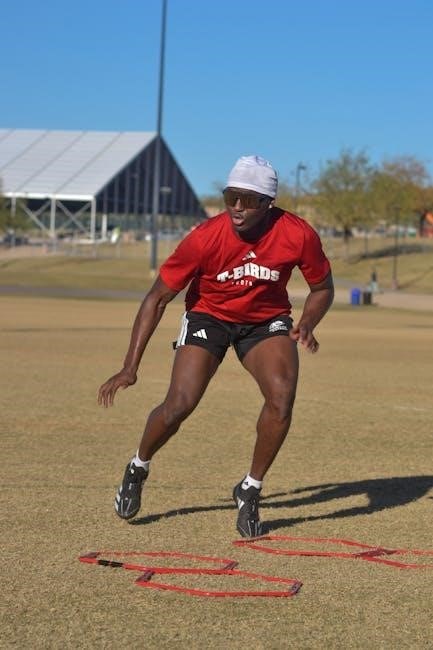
Shuttle runs‚ varying in distance (5-10-5‚ pro agility)‚ test an athlete’s ability to quickly change direction and accelerate. These drills build lateral speed and responsiveness‚ vital for reacting to opponents. Cone drills‚ arranged in various patterns‚ enhance agility‚ footwork‚ and spatial awareness. Athletes navigate the cones at full speed‚ focusing on tight turns and controlled movements.
Progression is key; drills start at a slower pace‚ emphasizing technique‚ before increasing intensity. Coaches monitor form closely‚ ensuring athletes maintain proper body positioning and avoid inefficient movements. These drills aren’t isolated exercises; they directly translate to game-like scenarios.
Sprinting Mechanics and Acceleration
Alabama’s program prioritizes proper sprinting technique‚ focusing on efficient mechanics for optimal speed and power. Athletes work on posture – maintaining a slight forward lean – and arm action‚ driving elbows back to generate force. Leg drive is emphasized‚ with a high knee lift and full extension. Acceleration drills‚ like resisted sprints and short bursts‚ build explosive power from a static start.

Coaches utilize video analysis to identify and correct flaws in form. Drills progressively increase distance and intensity‚ building both speed endurance and top-end velocity. Proper warm-up and cool-down routines are crucial to prevent injuries.

Position-Specific Training
Alabama tailors workouts to each position‚ emphasizing movements and strength crucial for game performance‚ maximizing individual athlete potential and team success.
Offensive Line Workout Focus
Offensive line training at Alabama prioritizes immense strength and power development‚ crucial for dominating the line of scrimmage. Workouts heavily feature variations of squats – back squats‚ front squats‚ and goblet squats – to build lower body strength. Bench press variations‚ including incline and decline presses‚ are essential for upper body power.
Beyond foundational lifts‚ the program incorporates explosive movements like power cleans and push jerks to translate strength into functional power. Core stability is paramount‚ with exercises like planks‚ Russian twists‚ and weighted carries. Specific drills focus on short-area agility and footwork‚ vital for pass protection and run blocking. The goal is to create a physically imposing and technically sound unit capable of controlling the line.
Defensive Line Workout Focus
Defensive line training at Alabama centers on developing explosive power‚ relentless strength‚ and exceptional conditioning. The program emphasizes compound lifts like squats‚ deadlifts‚ and bench press‚ building a robust foundation. Power development is achieved through Olympic lifts – cleans‚ snatches‚ and jerks – enhancing explosiveness off the line.
Specific drills focus on quickness‚ agility‚ and hand-fighting techniques. Sled pushes and resisted sprints build leg drive and endurance. Core work is crucial for maintaining leverage and power throughout each play. The aim is to forge physically dominant defenders capable of disrupting offenses and consistently pressuring the quarterback‚ demanding peak physical conditioning.
Running Back Workout Focus
Alabama’s running back program prioritizes a blend of speed‚ agility‚ and functional strength. Workouts incorporate explosive movements like plyometrics – box jumps and depth jumps – to enhance power and acceleration. Strength training focuses on lower body development‚ utilizing squats‚ lunges‚ and hamstring curls. Core stability is paramount‚ building a strong foundation for powerful running and injury prevention.
Agility drills‚ including cone drills and shuttle runs‚ improve change-of-direction speed and elusiveness. Conditioning emphasizes interval training to replicate the demands of game situations. The program aims to develop versatile backs capable of both power running and receiving‚ demanding exceptional athleticism.
Wide Receiver Workout Focus
Alabama’s wide receiver training centers on developing explosive speed‚ precise route running‚ and exceptional hands. Plyometrics‚ including box jumps and medicine ball throws‚ build lower body power and enhance jumping ability for contested catches. Strength training emphasizes agility and quickness‚ incorporating lighter weights with high repetitions. Core work is crucial for maintaining balance and absorbing contact.
Drills focus on acceleration‚ deceleration‚ and sharp cuts‚ mimicking the demands of route running. Hand-eye coordination drills refine catching skills‚ while conditioning builds endurance for sustained performance. The program aims to create receivers who are dynamic threats‚ capable of creating separation and making plays.

Nutrition and Recovery
Optimal nutrition‚ strategic hydration‚ and prioritized sleep are fundamental components‚ supporting intense training and maximizing recovery for peak athletic performance and injury prevention.
Importance of Diet for Football Athletes
A meticulously planned diet is paramount for Alabama football athletes‚ fueling the demands of intense training and competition. Caloric intake must align with expenditure‚ prioritizing complex carbohydrates for sustained energy‚ lean proteins for muscle repair and growth‚ and healthy fats for hormonal balance.
Strategic nutrient timing is crucial‚ with pre-workout meals optimizing performance and post-workout nutrition accelerating recovery. Micronutrients‚ including vitamins and minerals‚ play vital roles in immune function‚ bone health‚ and overall well-being. Alabama’s program likely emphasizes whole‚ unprocessed foods‚ minimizing sugary drinks and unhealthy fats to maintain optimal body composition and enhance athletic capabilities. Individualized dietary plans‚ considering position-specific needs‚ are likely implemented to maximize each player’s potential.
Hydration Strategies
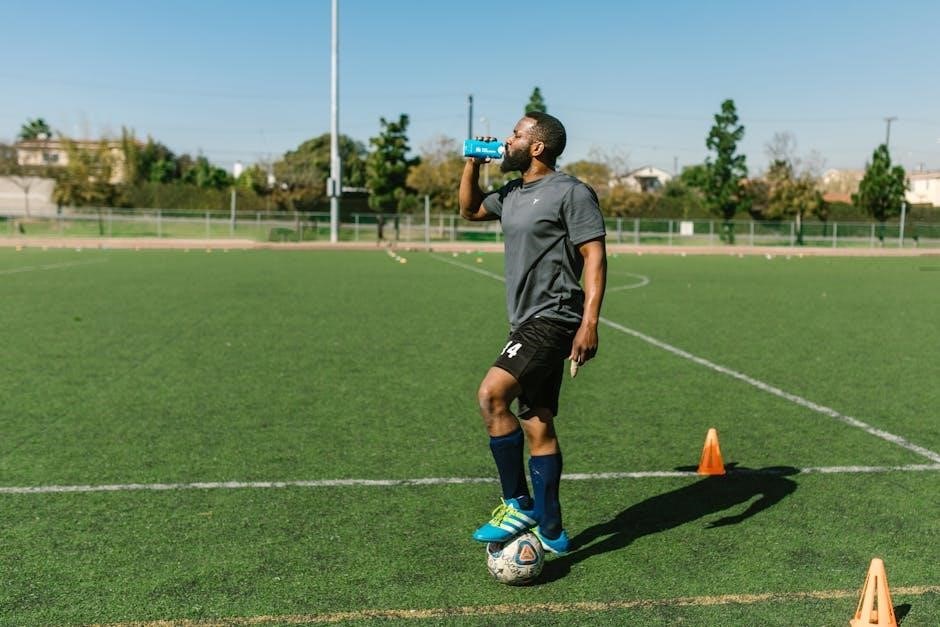
Maintaining optimal hydration is non-negotiable for Alabama football players‚ directly impacting performance‚ recovery‚ and injury prevention. Athletes are likely educated on recognizing dehydration symptoms and proactively consuming fluids before‚ during‚ and after training sessions and games.
Water is the primary hydration source‚ but electrolyte-rich sports drinks may be utilized to replenish sodium and potassium lost through sweat. Alabama’s program likely incorporates individualized hydration plans‚ accounting for factors like body weight‚ sweat rate‚ and environmental conditions. Regular monitoring of urine color can serve as a practical indicator of hydration status. Consistent fluid intake throughout the day‚ not just during activity‚ is emphasized to ensure peak physical condition.
Sleep and Recovery Protocols
Prioritizing sleep is fundamental to Alabama’s football program‚ recognizing its crucial role in muscle repair‚ hormone regulation‚ and cognitive function. Players likely adhere to strict sleep schedules‚ aiming for 8-10 hours of quality sleep each night‚ especially during demanding training periods;
Recovery protocols extend beyond sleep‚ incorporating active recovery techniques like light cardio and stretching to promote blood flow and reduce muscle soreness. Alabama likely utilizes modalities such as cold water immersion and massage therapy to accelerate recovery. Nutritional strategies‚ focusing on protein intake and carbohydrate replenishment‚ are also integral to the recovery process‚ ensuring athletes are prepared for subsequent training sessions.
Injury Prevention Strategies
Alabama’s program prioritizes proactive injury prevention through comprehensive warm-ups‚ targeted cool-downs‚ and prehab exercises addressing common football-related vulnerabilities.
Warm-up and Cool-down Routines
Alabama’s football warm-ups are dynamic‚ progressing from general movements to sport-specific drills‚ preparing muscles for intense activity and minimizing injury risk. These routines incorporate cardiovascular elements‚ mobility exercises – focusing on joint range of motion – and neuromuscular activation to enhance performance.
Cool-down sessions are equally crucial‚ employing static stretching to improve flexibility and reduce muscle soreness. Active recovery‚ like light jogging‚ aids in lactate removal and promotes faster recovery. Alabama’s approach emphasizes a gradual return to a resting state‚ preventing sudden stops that can contribute to muscle strains or other injuries. Consistent implementation of these routines is fundamental to player health and longevity.
Prehab Exercises for Common Football Injuries
Alabama’s football program proactively addresses injury prevention through targeted prehabilitation exercises. These routines focus on strengthening muscles surrounding vulnerable joints – particularly the knees‚ shoulders‚ and ankles – to enhance stability and resilience. Common exercises include rotator cuff strengthening‚ glute activation‚ and ankle mobility drills.
Emphasis is placed on correcting muscle imbalances and improving movement patterns to reduce the risk of ACL tears‚ shoulder dislocations‚ and ankle sprains. Alabama’s athletic trainers closely monitor players‚ tailoring prehab programs to individual needs and addressing specific weaknesses. This proactive approach minimizes downtime and maximizes player availability throughout the season.
Accessing Alabama Football Workout Resources
Publicly available‚ detailed programs are limited; however‚ sample workouts and training philosophies can be found through online searches and sports performance websites.
Availability of Publicly Shared Programs
Finding complete‚ officially released Alabama football workout programs in PDF format proves challenging due to their proprietary nature and competitive advantage. The university generally keeps detailed‚ internal training regimens confidential. However‚ glimpses into their methodologies emerge through articles‚ interviews with staff‚ and observations of practice routines. While a comprehensive‚ downloadable program isn’t readily accessible‚ various resources offer insights.
Sports performance websites and forums often dissect publicly available information‚ attempting to reconstruct potential workout structures. These reconstructions are based on observed drills and reported training philosophies. Furthermore‚ strength and conditioning coaches sometimes share modified versions inspired by Alabama’s approach‚ but these are not official programs. Expect to find snippets and principles rather than a complete‚ verified PDF document.
Potential for Finding Sample Workouts Online
Despite the lack of a fully released Alabama football workout PDF‚ numerous online sources offer sample workouts potentially inspired by their training principles. These often focus on key components like strength development‚ power‚ and agility‚ mirroring the program’s emphasis on comprehensive athleticism. Websites dedicated to football training frequently post routines incorporating exercises commonly associated with collegiate programs.
However‚ it’s crucial to approach these resources with caution. Authenticity and program suitability vary significantly. Many are generalized routines‚ not specifically tailored to the demands of Alabama’s system. Look for workouts emphasizing foundational lifts – squats‚ bench press‚ deadlifts – alongside plyometrics and speed drills. Remember to prioritize proper form and consult with a qualified coach before implementing any new training regimen.



Leave a Reply
You must be logged in to post a comment.